Cannes wrapped Friday and July 4th is Saturday. I’ve been thinking about the fact that they’re happening at the same time. The biggest creative awards show on the planet and the biggest brand opportunity in 250 years, back to back.
Let’s go…
ON THE AGENDA
What every Cannes Grand Prix winner had in common this year, and why it matters more than the trophy
Why Coke might be the only brand that actually earned its America250 campaign
What good commemorative branded merchandise looks like
“America Made Us”
THE LEAD
The Cannes Winners Knew Who They Were Before Anyone Was Watching
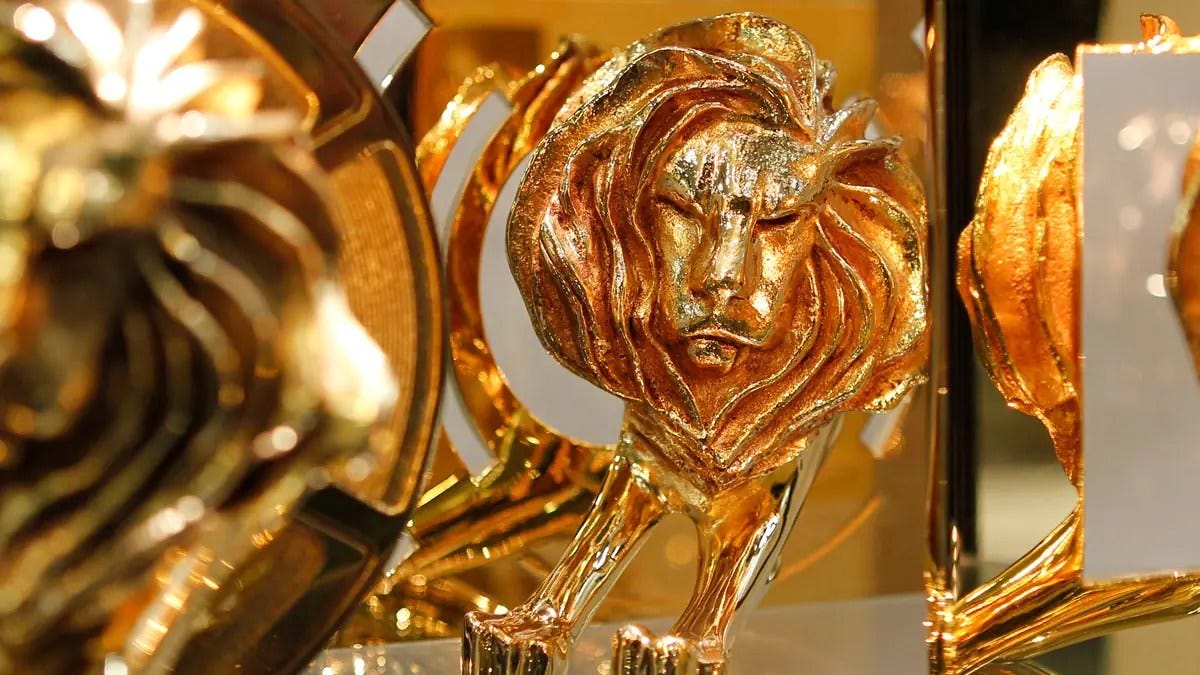
Cannes Lions wrapped Friday. Nearly 20,000 entries, five days, a lot of rosé, and $13 million less in entry fees than last year.
Also 7,000 fewer submissions compared to last year. The official explanation involves tighter criteria. The industry’s quieter answer is that a lot of agencies ran the math and decided the festival wasn’t worth it anymore.
Adidas took the Grand Prix in Entertainment for “Original Forever,” a film built around the Oasis reunion that’s been three decades in the making.
Columbia Sportswear’s CEO challenged flat-earthers to find the edge of the Earth in exchange for the whole company, and walked out with a Titanium.
Oreo took Titanium for cows in Mexico whose natural markings looked exactly like Oreo cookies.
Mother London won the Grand Prix in Film for two spots for Claude that debuted at the Super Bowl.
What connects all of it: none of these brands needed Cannes to tell them who they were. Adidas and Oasis have been a story since 1993. Columbia’s “Engineered for Whatever” isn’t a campaign, it’s a conviction. Oreo’s visual identity is so locked in that nature plagiarized it. And Anthropic knew exactly what it wanted to say about Claude before anyone wrote a brief.
The Lion is the recognition. The identity is the prerequisite. Most brands have one. The ones that win have both.
THE RUNDOWN
Coke Might Be the Only Brand That Actually Earned This
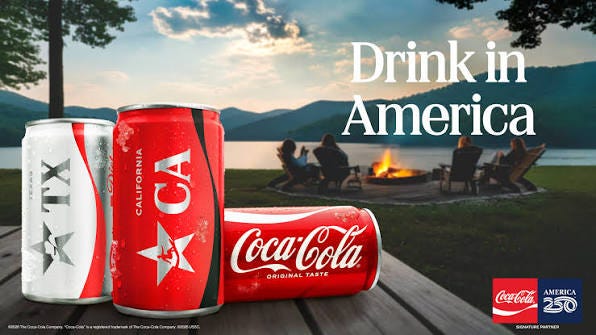
Coca-Cola is running a year-long America250 campaign called “Drink in America,” anchored by the brand’s first-ever collectible mini cans and state-branded commemorative packaging. The campaign runs through the PGA Tour Championship, music festivals, and sporting events for the rest of 2026. Nearly 140 years of being part of the American story backs the whole claim up.
The Thing to Remember: Most brands running an America250 campaign this summer have a few years of patriotic messaging behind them, not 140. Coke has been in American kitchens and at American ballparks longer than most of our grandparents were alive. That’s the permission that makes the collectible cans work.
A South Carolina Ironware Company Put an Eagle and 13 Stars on a Cast Iron Skillet
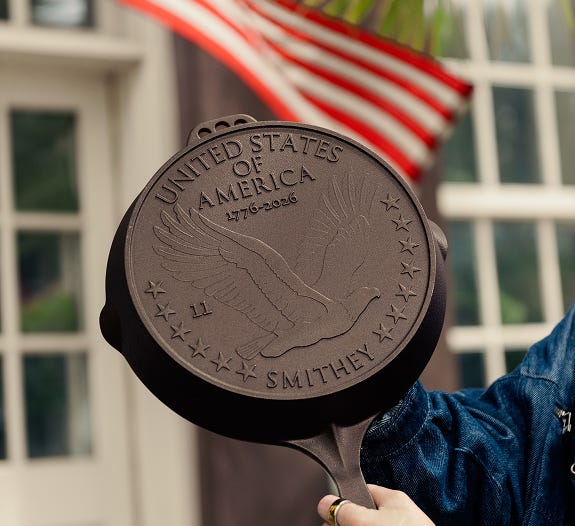
Smithey Ironware of South Carolina released a limited-edition No. 11 American Anniversary Skillet for the 250th. Cast in the U.S., free of chemical coatings, with a bald eagle in flight and 13 stars cast into the bottom of the pan. No red packaging. No flag on the label. The object does the commemorating.
The Thing To Remember: Walk through any store this week and you’ll find a hundred products dressed up for the 250th. Most of them are existing products with a sticker. Smithey made a new thing, designed specifically for this moment, with an image cast permanently into the iron. That’s the difference between commemorating something and exploiting a date on the calendar.
↗ Alliance for American Manufacturing
The Official America250 Merch Store Is Actually Worth Looking At
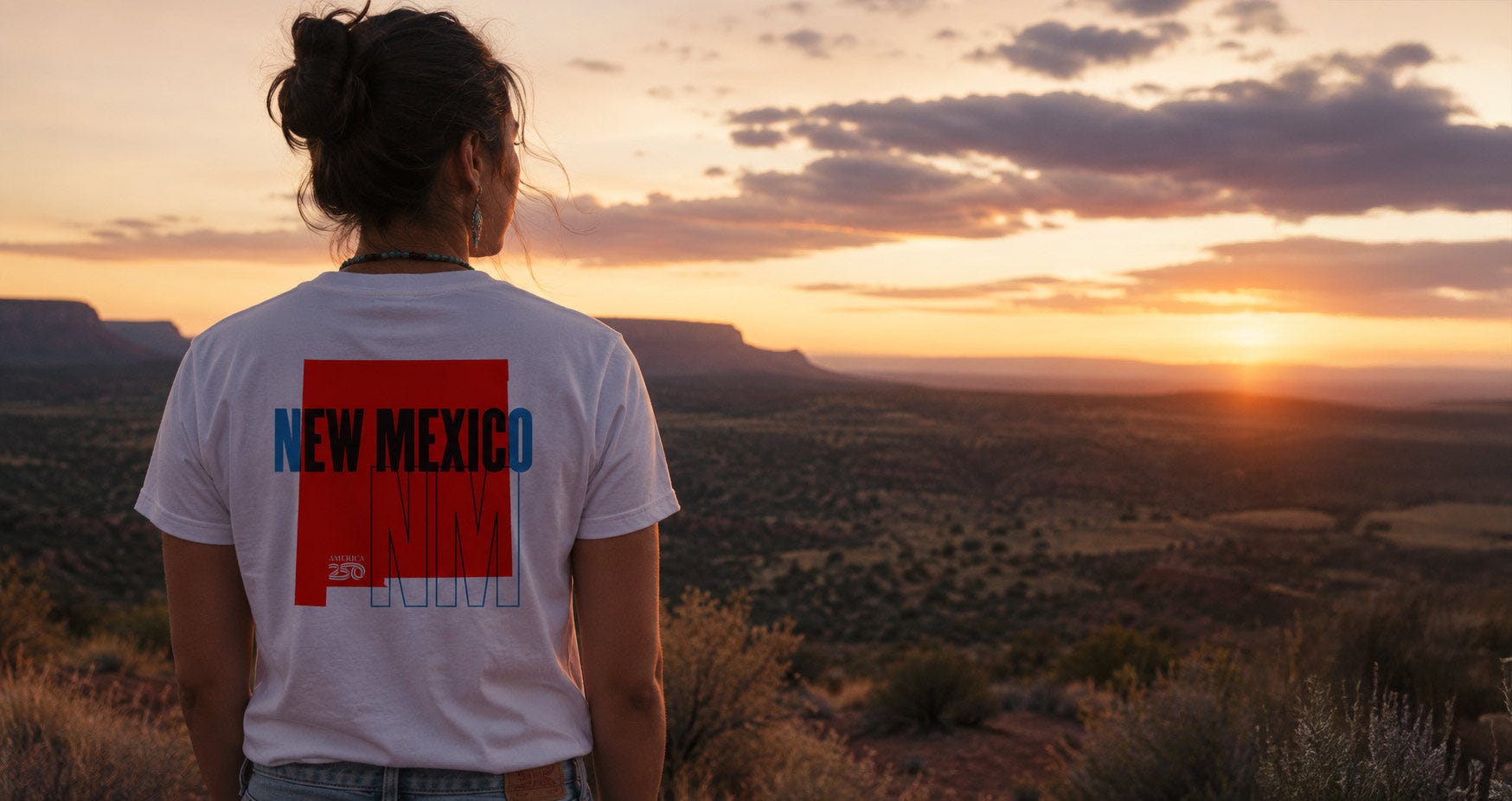
The official America250 merchandise store launched a “Nation Series”: state-by-state branded merch celebrating every U.S. state and territory and the people who call them home. Limited-edition artist collaborations. Officially licensed commemorative pieces. American-made products throughout. It’s a rare case of an official commemorative merchandise program that actually made decisions about what things should look like and why.
The Thing To Remember: Most official event merchandise is an afterthought. Somebody puts a logo on a tote and calls it done. The Nation Series organizes around places and people, not the organization behind the event, and that’s the reason it actually works.
“America Made Us.” Chrysler Went Bankrupt in 2009.
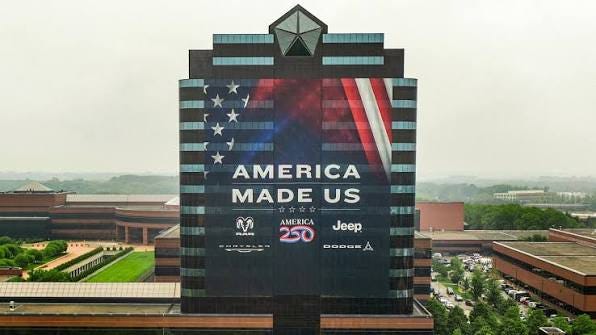
Stellantis, parent company to Dodge, Jeep, Ram, and Chrysler, launched an America250 campaign with the tagline “America Made Us.” The campaign includes wrapping the Chrysler Technology Center in Auburn Hills in anniversary signage. The company’s CMO called it “a privilege and a promise.” Chrysler received a $12.5 billion U.S. government bailout in 2009.
The Thing To Remember: “America Made Us” is true in more ways than the campaign probably intended. America bailed Chrysler out, kept the brand alive, and gave it a second chance to build cars people actually wanted. The line is more interesting when you know the history.
BRETT’S TAKE
The Festival That Built Itself on Ideas Is Running Out of Them
Cannes Lion entries were down 25% this year. Nearly 7,000 fewer submissions. About $12 million less in entry fees.
The official story is that stricter criteria kept weak work out is probably partly true. The less comfortable story is that the industry looked at the entry cost, the flight cost, the hotel cost, and the week of yacht parties and brand activations and tech company panels, and decided the math didn’t add up anymore.
The festival started as a place where the work was the point. The best campaigns in the world, judged by the best people in the business, with a lion that meant something when you put it on the shelf.
At some point it became something else. The work is still there, and this year it was really good. But the festival around it has metastasized into something the work can barely compete with. There are 15,000 badge holders and another 85,000 people showing up for the parties, the panels, and the access. Google, Meta, and every other tech company that’s spent the last decade replacing the creative work being celebrated there now sponsors the beach where you go to celebrate it.
Seven thousand fewer entries. The official story blames the criteria. The more plausible story is that a lot of people ran the numbers and decided the festival isn’t worth it anymore.
Creativity is a business value. It deserves a festival that acts like one. Cannes used to be that place.
THE PITCH
This week’s issue is full of brands asking whether they’ve earned what they’re claiming. The Cannes winners had. Most of the America250 campaigns don’t. The gap between those two situations is a place where what a brand says it is and what the brand experience actually delivers are two different things.
If you’re not sure which side of that line your branded merchandise program is on, that’s what our Brand Friction Audit exists to find. It’s a discovery process we run to identify exactly where your physical brand expression conflicts with your brand promise, and what to do about it. Every audit is specific to the brand we’re looking at. We don’t issue a generic report.
If that sounds relevant to where you are right now, reach out. I’ll walk you through what we look at and how it works.
That’s it for this week…
Thanks for reading. Comment below and share far and wide.
P.S.
Sat on the dais at Mahwah High School's graduation this week as a member of the Board of Education. Didn't have to say anything, which was fine by me. Just watched a 190+ kids collect a diploma. One of the better ways I've spent a Thursday in a long time.
See you next week.