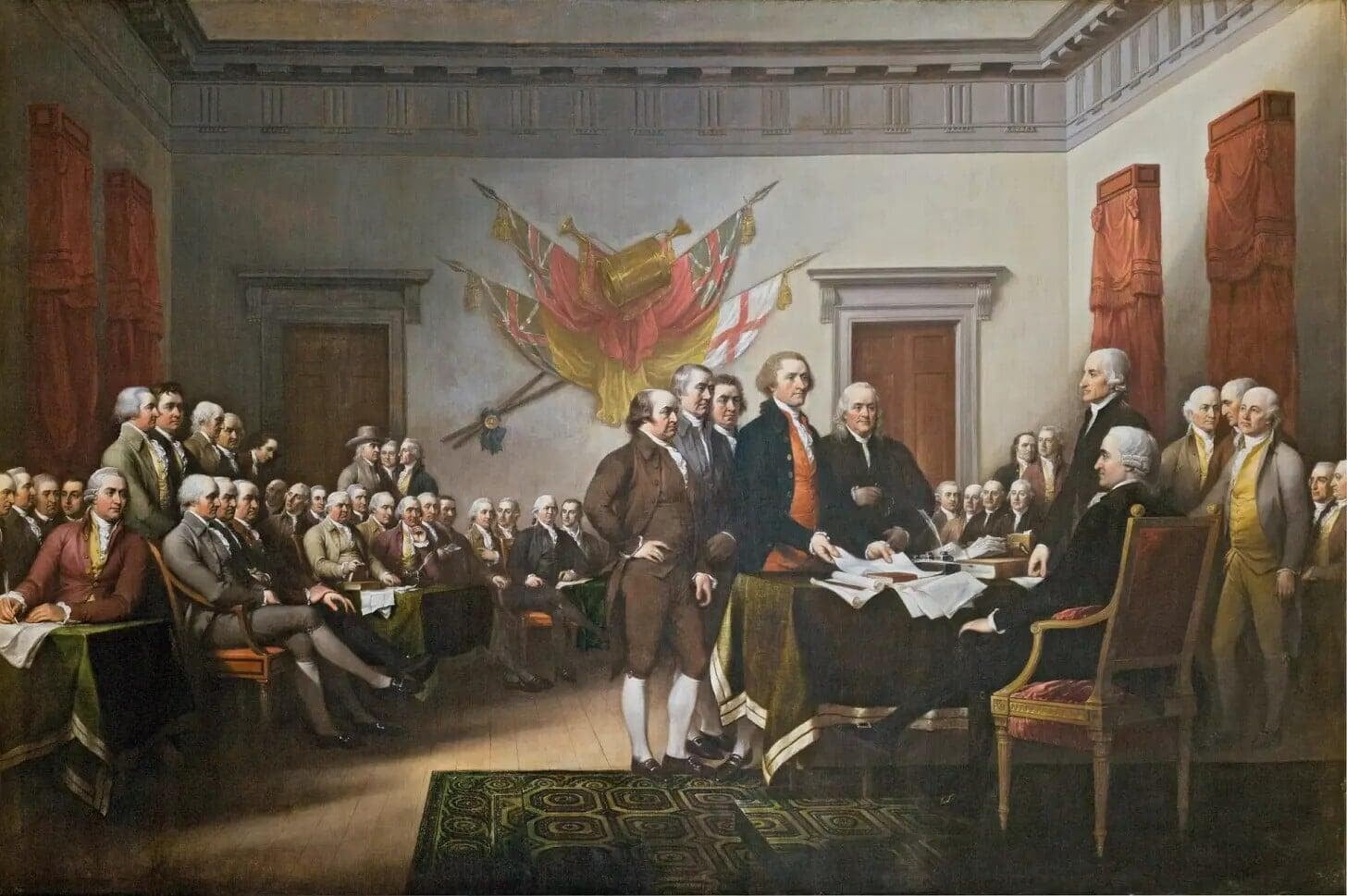
This year marks 250 years since the Declaration of Independence. The country is marking it in every direction. Fireworks in a ton of cities. More than 50 tall ships from roughly 30 nations gathered in New York Harbor for the International Fleet Review. Museums opening exhibits they’ve been building for a decade. Philadelphia alone has sixteen days of programming leading into the Fourth.
Underneath all of it sits one document. One sheet of parchment. 1,320 words. 56 names.
Two hundred fifty years later, people still read it, quote it, argue about what it means, and can tell you what it says without opening a textbook. It was written by people who knew exactly what they were putting their name to, and it still works exactly as intended.
Now think about the last branded item your firm handed out. A tote bag from a conference. A pen from an office move. A gift box for a new client.
Where is it now?
Most of it doesn’t make it to the next fiscal quarter. Not because anyone did a bad job making it. Because nobody ask what it needed to say. The order went through on a deadline, not a decision. It shipped as a placeholder. It came back as clutter, if it came back at all.
The Declaration didn’t have that problem. Every word in it was chosen by people staking their name, their property, and in more than a few cases their life on the outcome. There’s a smaller version of that same decision sitting on your desk right now, every time your firm hands a client, a hire, or a partner something with your name on it.
What fifty-six signatures actually bought
Most firms treat their brand by ordering in bulk from whoever answers the phone fastest. Someone gets handed “merch” for the client event three weeks out. They pick from a catalog. The order ships. Nobody in the building reviews it the way they’d review a client deliverable.
I get it.
A welcome kit doesn’t feel like it carries the weight of a signed contract or a filed brief. It’s an object, not an argument.
I disagree.
The welcome kit sits on a desk for months. The tote rides in a car for years. The pen shows up in every meeting a client has for the rest of the relationship. None of your other brand touchpoints get that kind of runtime. Not the pitch deck. Not the website. Not the LinkedIn post you spent two hours writing last week.
Picture a law firm that used to send new clients a standard welcome folder. Branded pen, branded notepad, a printed letter from the managing partner. It looked professional. It also looked exactly like every other professional services welcome folder a client had ever received, because it came from the same catalog everyone else was ordering from.
Now picture that same firm rebuilding the kit around one detail. The founding partner tried her first case in a specific courthouse in a specific city. The new kit references that courthouse directly: a small etched detail on the notebook cover, a line in the letter that explains why. One change. Specific to them. Impossible to hand to a competitor’s client by mistake.
That’s the kind of detail clients bring up in meetings months later.
That’s the aha moment buried in the Declaration, too. It wasn’t powerful because the parchment was expensive or the handwriting was elegant. It was powerful because it was specific enough that only those 56 people could have signed it. Swap in 56 different names and it stops being true. The specificity is the whole document.
In our experience, most branded merchandise fails that test before it ships. Swap the logo and nothing else about the object changes. That’s a decision problem. Someone approved the order without asking what the item needed to prove first.
There’s a name worth giving this standard: the Declaration Test. Hand this object to a stranger with no other context. Would they know exactly what your firm stands for? The founders never set out to build a bar for corporate gifting. They built one anyway, by accident, because they wrote something they were willing to sign their actual names to.
Firms that have been ordering branded merchandise the standard way for years are behind because nobody asked the harder question before the purchase order went in. Ask it early enough, and the item never ends up in the drawer nobody opens.
Five questions before you sign off
The founders didn’t workshop the Declaration for brand safety. They wrote something specific enough to be dangerous, then put their names on it.
Five questions, in order, each one building on the last. Run your next welcome kit, client gift, or onboarding box through all five before you approve the order.
1. Audit what you’re currently signing
Pull the last three physical items your firm handed a client or a new hire. Lay them on the table. Would a stranger know they came from you without the logo facing up? If the answer is no, you’ve been signing blank pages.
2. Write your “these truths”
The Declaration’s second sentence runs 35 words and states exactly what the whole document is for. That’s the model. What’s the one line your brand should prove, every single time it’s in someone’s hands? Write it down before you place the order.
3. Attribute it
No signer used a stamp. Fifty-six people wrote their own names, in their own hand, on a document everyone could later trace back to them. Your materials should carry that same fingerprint: a detail specific to your practice, your city, your story, not a placeholder that any competitor could swap in with a find-and-replace.
4. Build for the display case, not the drawer
This is where most firms cut corners first, because the item feels small next to the rest of the budget. It’s also the corner clients notice fastest, because they’re holding the evidence in their hands.
5. Test it on a stranger
Hand the finished object to someone who has never heard of your firm. Give them thirty seconds. Ask what they think you do. If they can’t answer, the object failed the test before it ever reached a client.
Fail this test and the item gets tossed before the quarter is out. Pass it, and it’s still sitting on someone’s desk a year from now, doing the quiet work of reminding a client why they picked you. That’s not a small thing. That’s how trust actually compounds, one object at a time.
The Crafted Takeaway
Fifty-six people put their real names on a single page because they had already decided what it needed to say. Decide what your next branded item needs to prove before you approve the order, not after a client asks what it was.
Two hundred fifty years ago, 56 people looked at a blank page and decided exactly what they were willing to put their names on. What’s the last thing your firm signed off on without asking the same question?